
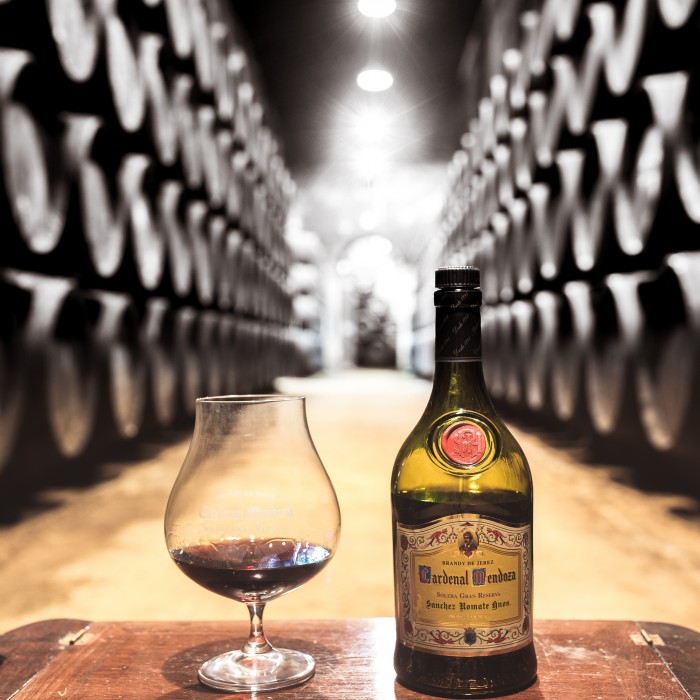
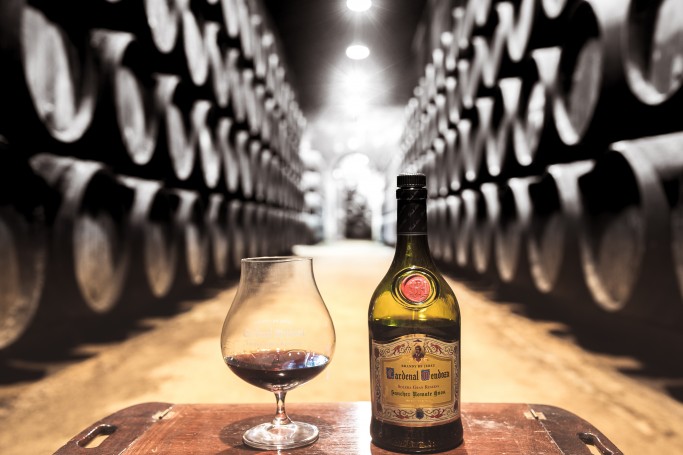
There are many stories about brandy, yet its exact origins remain unclear, although records of its existence date back to the 16th century.
History books tell us that its emergence was due to chance.
At that time, Spain had a very lucrative market for the export of “holandas.” The holandas were barrels—or botas, as they are called in the Jerez de la Frontera area—filled with wine distillate that were shipped to Holland for subsequent international distribution via the Route of the Indies. However, one of these routine shipments was delayed, and the wine distillate had to wait longer than usual inside the barrels.
The surprise came when, as the goods were about to be shipped to their destination, they opened the casks to verify that the spirit was still in good condition for sale and discovered that it had acquired finesse and flavor through contact with the wood that had previously held sherry. The ‘Brandewijn’—literally, as it was called in the Netherlands, “Burnt Wine”—had been transformed, and with it, the world of beverages in general.
A complete success that came out of nowhere.
Spanish Brandy is spreading across the globe
From that point on, Brandy de Jerez began to be produced using the soleras and criaderas system typical of the region for subsequent distribution to various countries.
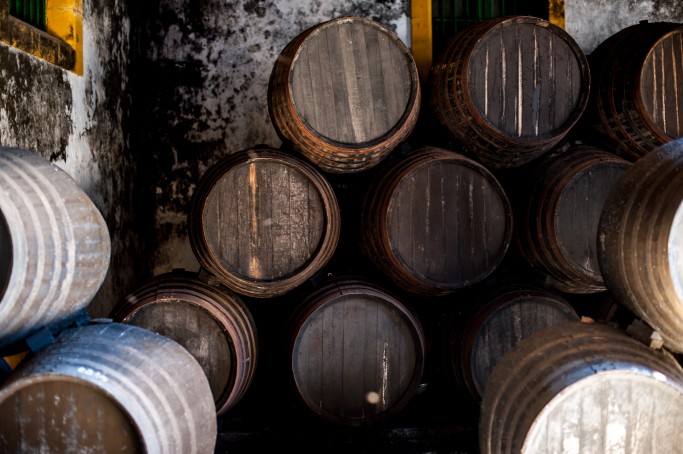
To understand this, we must go back to the year 1587, when the pirate Drake arrived at the port of Cádiz and took 2,900 barrels of sherry as booty, which he later sold in taverns. Thanks to this, the English market is one of the most prosperous and enthusiastic about sherry in general, and brandy in particular—where they began calling it “Spanish Brandy” to distinguish it from French cognac.
Brandy de Jerez, unlike Cognac, has certain characteristics that make it exceptional and inimitable.
One of these is the use of Palomino grapes—the variety used to produce sherry—as well as aging in casks that previously held sherry—for at least three years— (usually Fino, although today casks that previously held Oloroso or Pedro Ximénez are also used).
Brandy from Jerez stands out from other brandies due to its production process, the quality of its raw materials, and the climatic conditions of the region where it is produced. Of course, one of the most influential qualities is time, as we can see in the case of Cardenal Mendoza ‘Non Plus Ultra,’ which has been aged for 50 years in American oak barrels.
As you can see, Spanish brandy is a spirit with many years of history and tradition that embodies our character and is a true symbol of our country.
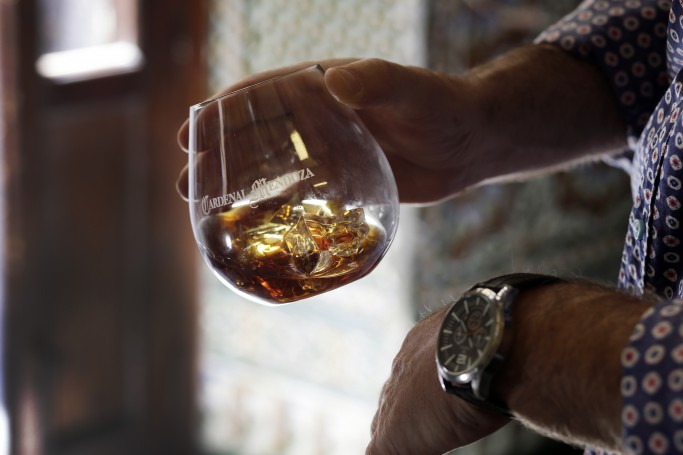
Did you know…?
The Cathedral of Jerez de la Frontera was funded by a special tax on brandy authorized by the Spanish Crown.
It is produced by distilling Palomino grape wine.
There are three types of brandies from Jerez:
Solera: They have been aged for approximately one year.
Solera Reserva: They remain in the wine cask for at least 3 years before bottling.
Solera Gran Reserva: These are brandies aged for 10 years or more.
Brandy has a longer history than French cognac.


