
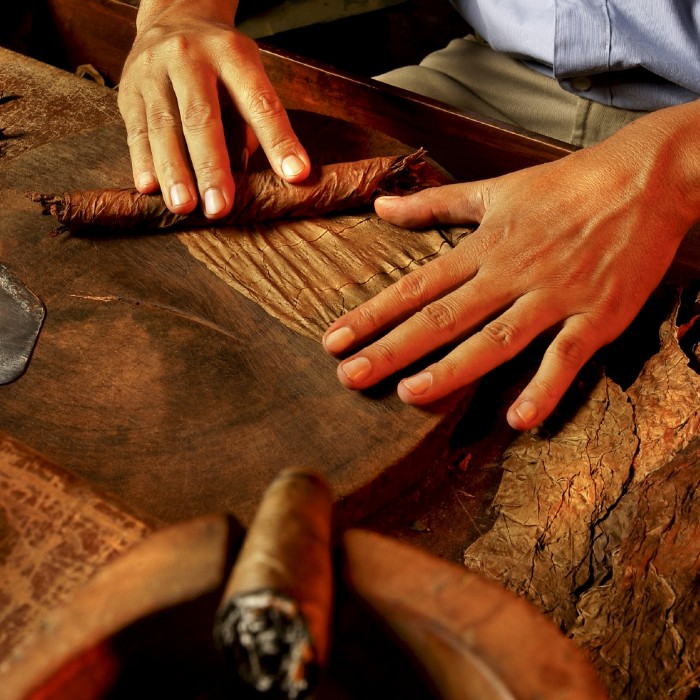
The connection between Cuban tobacco and Spain is stronger than that of any other country. Spain imports more than $16 million worth of cigars and accounts for 30% of Cuba’s tobacco exports every year.
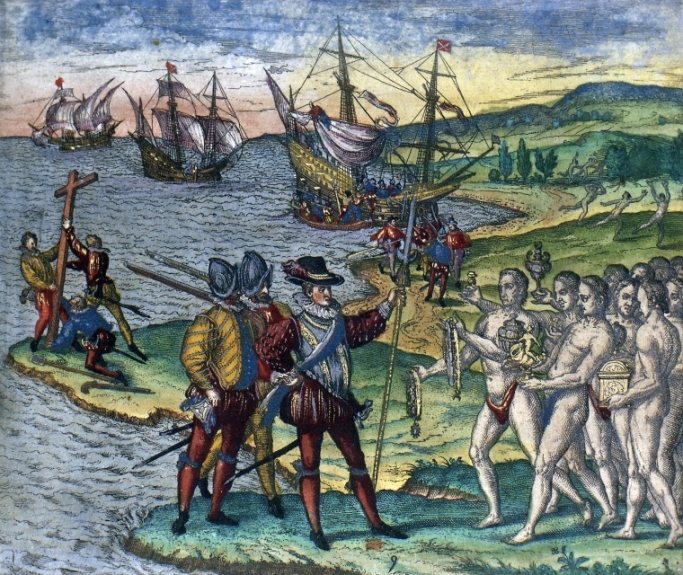
We can trace this connection back to Christopher Columbus’s return journey after “discovering” the New World in 1492, when he returned to Spain and presented King Ferdinand II and Queen Isabella with the discoveries from his voyages, including a new kind of plant—called tobacco.
The indigenous peoples of the Americas were the first to cultivate and smoke tobacco; in fact, it is believed that the word “cigar” derives from “sikar,” a Mayan word for the act of smoking.
It was Columbus’s contact with the Taínos, the indigenous people of Cuba, who showed him how they rolled tobacco leaves for smoking, and since then Cuba has been synonymous with cigars.
And, although the first tobacco plantation in the United States was established in 1612, cigars did not reach the American colonies until 150 years later, when a British officer brought them from Cuba.
Smoking quickly became a status symbol in Europe following Columbus’s voyages, and Spain was quick to adopt this pastime.
In the 19th century, smoking was the most common way to enjoy tobacco, and although there were attempts at local production—planting seeds and plants brought from Cuba—the Spanish soon realized that the cigars produced in Cuba were vastly superior.
Due to the fact that Cuba was a Spanish colony, the relationship between the two countries has always been close, and in 2000, ties with tobacco companies grew much stronger following the acquisition of Habanos SA by the Spanish tobacco giant Altadis —the production arm of the Cuban state tobacco agency, Cubatabaco, which controls cigar exports—
Other countries with similar climates produce cigars.These include the United States, the Dominican Republic, and Honduras, but none of them can rival the quality of Cuban cigars. As with Sherry wines, there is a unique combination of climate, tradition, and production expertise that cannot be replicated anywhere else in the world.
Spain has an enduring love affair with products that are complex to produce and full of character—such as Iberian ham, Cardenal Mendoza, or Cuban cigars—and the Spanish people, a nation that understands, will settle for nothing less than the best.


